
To dominate World of Warcraft raiding, master these top tips: Approach new fights strategically by breaking down fight mechanics. Craft effective recruitment posts clearly outlining roles and goals. Set strong communication with clear expectations. Speedrun without confusion by addressing voice chat clutter. Schedule raids efficiently and lead without panicking. Make decisions quickly and adapt to changes. Manage conflicts and boost morale. Establish a healthy raid dynamic by evaluating performance and setting clear goals.
Key Takeaways
- Prepare thoroughly by requiring all raiders to have necessaryaddons, gear, and potions.
- Establish control and punish those who do not follow commands.
- Manage healers by dividing raid responsibility and coordinating cooldown rotations.
- Know your raiders’ abilities and limitations and delegate roles accordingly.
- Foster a positive team atmosphere by being self-critical, listening to feedback, and promoting collaboration.
Approaching New Fights Strategically
When approaching a new fight in a World of Warcraft raid, preparing a strategy is necessary; keep it simple, especially when working with multicultural teams where language barriers may exist, and post key information in Discord to help everyone stay on the same page.
A key element of the strategy is strategic positioning. Analyze the fight mechanics and identify the key positions your team needs to maintain to avoid damage and exploit enemy weaknesses. Utilize raid buffs to enhance your team’s abilities and capitalize on opportunities to deal more damage.
Breaking down the fight mechanics into manageable chunks helps guarantee that all team members understand their roles and the timing of their actions. This clear understanding is crucial for executing the strategy efficiently. Communicate your plan effectively, focusing on the most important elements to avoid information overload.
Efficient communication will help your team stay on track and address any issues promptly. By emphasizing strategic positioning, analyzing enemy weaknesses, and utilizing raid buffs, you can develop a robust strategy that sets your team up for success in a World of Warcraft raid.
Crafting an Effective Recruitment Post
When crafting an effective recruitment post, you should highlight key features that attract the right candidates, such as raid times, requirements, and your guild’s overall environment.
Using consistent language guarantees clarity and helps potential recruits quickly understand what your guild is about.
Key Features Highlight
To efficiently attract viable candidates, your recruitment post must clearly convey the key features and benefits of your guild by using consistent language and formatting and providing essential details such as goals, requirements, and server considerations.
Highlighting your guild’s unique raid strategy, whether it be casual, focused, or competitive, will help potential applicants determine if they’re a good fit. Concisely explain your raid schedule, progression, and expectations. Include any notable past achievements or milestones.
Provisions for server regions and language should also be explicitly stated.
Consistent Language Use
Crafting an effective recruitment post requires consistently using language that resonates with your target audience, thereby communicating your guild’s unique identity and promises. This helps to attract ideal candidates who share your values and goals. Effective language use is key to raid leading strategies, ensuring your message is concise and impactful. When crafting your post, keep in mind the following best practices:
| Language Techniques | Benefits |
|---|---|
| Simple and concise language | Easier to understand, especially for non-native speakers |
| Consistent formatting | Visually appealing, easy to navigate |
| Highlighting key benefits | Attracts ideal candidates, showcases your guild’s strengths |
| Avoiding jargon and technical terms | Increases comprehension, makes post more accessible |
| Inclusive language and tone | Encourages diversity, promotes a welcoming environment |
Setting Clear Goals & Expectations
Establishing clear performance goals guarantees that your team stays focused, motivated, and working towards a common objective, ultimately enhancing your raid’s success in World of Warcraft.
Managing expectations and setting goals can save you and your team from confusion and frustration. Here are some important tips to set clear goals and expectations:
- Set Realistic Goals: Confirm that your goals are achievable and aligned with your team’s capabilities. Unrealistic goals can lead to demotivation and dissatisfaction.
- Define Success: Clearly outline what success means for each raid. This can be measured through metrics like boss kills, damage outputs, or execution of mechanics.
- Break It Down: Divide larger goals into smaller, manageable objectives. This helps to maintain momentum and track progress.
- Continuous Feedback: Regularly discuss goals, progress, and areas for improvement to prevent misunderstandings and ensure everyone stays on track.
Establishing Strong Communication
You need to nurture strong communication habits to guarantee your team stays informed, coordinated, and productive. Effective communication strategies form the backbone of successful raid leadership, and some simple practices can notably improve your teamwork.
For instance, maintaining clear communication channels is pivotal. Encourage two-way feedback and confirm everyone is heard, not just vocally dominant players. Schedule regular team meetings, whether virtual or in-game, to keep the team aligned and informed.
When issues arise, adhere to clear conflict resolution methods. Addressing concerns privately and clearly helps build trust among team members. Document key points and goals to maintain transparency and consistency.
During raids, keep directions concise and focused on objective goals, steering clear of too much detail or micromanaging. By prioritizing open and respectful communication, you can identify problems early, avoid undue stress, and enhance your team’s performance and morale.
As a raid leader, your communication approach defines the environment and sets the tone. By conveying goals, strategies, and expectations effectively, you confirm a cohesive and effective team that can tackle even the most formidable challenges in World of Warcraft.
Speedrunning Without Confusion
As a raid leader, you know that speedrunning requires precise coordination. To achieve smooth runs without confusion, you must establish clear raid communication, set realistic goals, and guarantee coordinated role assignments among your team members.
Clear Raid Communication
Effective communication is essential for a raid team to navigate speedruns with precision and avoid confusion. Clear and concise instructions from the raid leader make sure that every member is aware of their role and the strategy for the current fight.
Here are some key points to improve communication:
- Keep it Simple:
Avoid long, drawn-out explanations that can confuse or lose your team. - Use Specific Names:
When calling for help or buffs, always include your name for clear identification. - Avoid Excess Chatter:
Maintain a clear and quiet Discord or voice comms channel, allowing each player to focus on their tasks. - Keep it Brief:
Use the most direct language possible, omitting unnecessary words or phrases.
Setting Realistic Goals
To set your team up for success in World of Warcraft speedrunning, you must establish achievable goals that reduce confusion and optimize raid performance. Understanding your team’s capabilities will help you set realistic expectations, it’s crucial to everyone remains motivated and on track.
When setting goals, it’s important to break them down into smaller, measurable objectives you can track and assess. This will help you stay focused and make adjustments as needed.
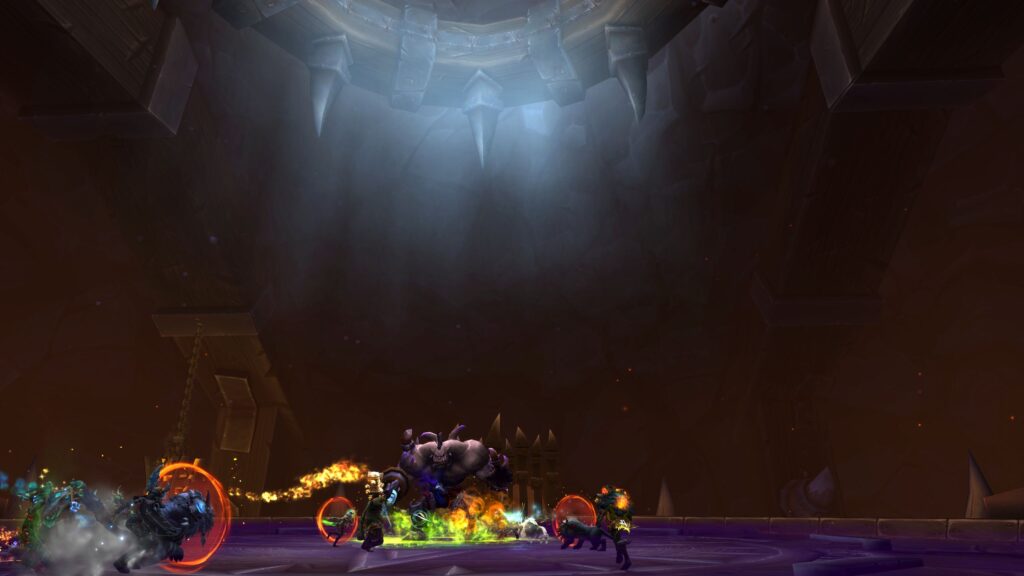
For efficient progress tracking, utilize tools like Warcraft Logs, which provides detailed combat analysis to identify areas of improvement. Additionally, RaidPlan.io helps map out boss fights, making sure you and your team are strategically positioned.
Set specific timings for tasks and assign roles to individual members to ensure clear responsibilities. Regularly review progress with your team, addressing any struggles and making adjustments.
Coordinated Role Assign
Clear role assignments are the backbone of any successful speedrun, so make certain your team knows who’s doing what and when. In a fast-paced raid environment, misunderstandings can lead to costly mistakes. Assign a primary and secondary role to each member, guaranteeing flexibility and strategy adaptation. This way, if someone falls behind, others can cover the gap without confusion.
To make the most of this approach, consider these essential steps:
- Communicate Assignments: Before the raid starts, discuss and agree on the specific roles for each member.
- Set Expectations: Confirm everyone understands what’s expected of them in their primary and secondary roles.
- Practice Coordination: Conduct practice sessions to refine position coordination and role rotation.
- Adapt to Situations: Develop a culture where team members willingly adjust to changing situations and help as needed.
Managing Raiders & Their Performance
As a raid leader, you must be prepared to handle both the challenges of managing raiders and addressing concerns, often requiring you to have difficult conversations. Effectively managing raiders and their performance is essential for success in World of Warcraft raids. Here are some essential tips for managing raiders and their performance:
Evaluator – Feedback Loop – Accountability
| Aspect | Leader’s Role | Raiders’ Responsibilities |
|---|---|---|
| Performance Evaluations | Conduct regular checks on progression and skill level. Provide constructive feedback and set clear goals. | Regularly reflect on performance and adapt to feedback. Hold themselves accountable for meeting goals. |
| Player Improvement | Identify areas for improvement and offer guidance. Encourage self-improvement. | Actively work on improving weak areas, engage with resources, and maintain open communication with the raid leader. |
| Feedback Loop | Set up a system for raiders to provide feedback on strategies and raid dynamics. | Provide detailed and actionable feedback to help the raid team improve. |
These strategies focus on creating a culture of accountability and growth, where both the raid leader and individual raiders have defined roles in fostering progress.
Successful Raid Scheduling & Timing
As the raid leader, you need to make the most of your raid time by using resource management tools and strategies.
This includes setting fixed schedules and being mindful of your raiders’ availability to avoid scheduling conflicts.
Flexibility in scheduling can also be key to ensuring that your raid runs smoothly and that your team can adapt to any unexpected issues that may arise.
Maximize Raid Time
To guarantee effective raids, designating specific nights of the week for raiding and communicating schedules well in advance can help prevent schedule conflicts and maintain a consistent progression pace. This ensures that your team is prepared and focused on achieving goals during each raid session.
Implementing effective time management techniques is vital for efficient raids. Here are some key strategies to maximize raid time:
- Pre-raid Planning: Utilize tools like Warcraft Logs and RaidPlan.io to analyze previous attempts, determine areas for improvement, and plan the next raid carefully.
- Optimize Raid Composition: Make sure you have the ideal composition of classes and roles to tackle each encounter.
- Log Review and Feedback: Regularly review combat logs to identify individual mistakes and provide constructive feedback for improvement.
- Streamlined Decisions: Assign roles and responsibilities clearly to avoid confusion during raids.
Avoid Scheduling Conflicts
You can reduce conflicts by anticipating and addressing potential scheduling issues ahead of time, making sure your raid team stays aligned and committed to a common objective. One key strategy is to maintain open communication with your team about conflicting schedules, making adjustments when necessary to ensure that your available time is utilized effectively. This includes setting realistic goals and coordinating with team members to identify best times for each raid session.
Effective time management and scheduling efficiency are key elements in avoiding scheduling conflicts. Strategies like the critical chain method, which leverages available slack in the project to adjust schedules without affecting timelines, can be helpful.
In the case of last-minute adjustments, consider having extra help ready or temporarily extending raid times to keep progress on track.
Flexibility Over Fixed Schedules
Building flexibility into your raid schedule allows you to adapt easily when the unexpected arises. This adaptability is essential in maintaining your guild’s momentum and morale.
Rather than rigidly adhering to a fixed schedule, consider incorporating elements that permit last-minute changes.
Here are some ways to implement flexibility:
1. Emphasize Adaptability: Be prepared to adjust strategies to respond to unexpected challenges or changes in your team’s composition.
2. Class Balance Management: Monitor and address class balance issues as needed to ensure peak team performance.
3. Flexibility in Leadership: Demonstrate a willingness to adjust plans based on real-time circumstances to maintain a positive and productive raid environment.
4. Consumable Planning: Ensure that your team is well-prepared for instances by stockpiling necessary consumables and adjusting your schedule to accommodate instance resets.
Leading Without Panicking or Hesitation
At the core of effective raid leadership is the ability to make clear, timely decisions even when faced with pressure and uncertainty, keeping your Raiders calm and focused despite the chaos unfolding around them. This involves a balance between maintaining awareness of the entire fight and keeping a level head when things don’t go as planned.
To achieve this, practice strategic leadership techniques. For instance, set realistic and achievable goals for each raid session, breaking them down into manageable steps. At the same time, be prepared to adapt your strategy if needed to avoid getting stuck on a particular obstacle.
Additionally, prioritize fostering strong team morale by encouraging open communication and providing constructive feedback. This helps to maintain unity and stability during demanding moments.
When conflicts arise, manage them objectively by clarifying both perspectives and defining the problem. From there, make the tough decisions and make sure all parties understand and agree with the resolution.
In such high-pressure situations, staying collected and decisively will greatly enhance your Raiders’ confidence and ability to follow your lead, ultimately improving overall performance and success in the raids.
Making Decisions & Adapting Quickly
Effective raid leaders must draw on their situational awareness to constantly monitor unfolding events and adjust their strategies accordingly. In the heat of battle, it’s essential to make swift, informed decisions and adapt strategies as needed. This requires more than just knowledge of the game; it demands an ability to read situations, recognize patterns, and react decisively.
To excel in this area, follow these key tips:
- Stay flexible: Be prepared to alter your plan if something isn’t working.
- Focus on priorities: Identify key objectives and allocate resources accordingly.
- Analyze errors: Learn from mistakes and adjust strategies to prevent recurrence.
- Communicate effectively: Clearly convey changes to your team.
Maintaining a Healthy Raid Dynamic
To foster a positive and productive raid environment, you should encourage open communication and constructive criticism among team members. This helps to build trust and confidence among raiders, ensuring that everyone feels heard and valued. By promoting a culture of continuous improvement, you can constructively address areas where your team may be struggling.
| Conflict Resolution | Trust Building | Morale Boosting |
| Protect team members during disputes | Share strategies and expertise | Celebrate victories and milestones |
| Establish clear expectations | Regularly check-in with team members | Conduct team-building exercises |
| Address conflicts promptly and fairly | Create team bonding activities | Recognize individual contributions |
Conflict resolution, trust building, and morale boosting are all pivotal elements in maintaining a healthy raid dynamic. Effective conflict resolution not only prevents team members from feeling frustrated but also helps to establish clear rules and expectations. Trust building activities and exercises enhance team cohesiveness, ensuring that everyone works towards a common goal. By incorporating these strategies, you can maintain a positive and productive raid environment, leading to a smoother and more enjoyable raid experience….
Frequently Asked Questions
How Do I Balance Helping Underperforming Raiders With Progressing Harder Content?
To balance helping underperforming raiders with progressing harder content, lead by example. Clearly communicate the expected performance and the guild’s goals.
Focus on improvement by identifying the specific practices each raider needs to work on. Be approachable and available for guidance, but emphasize that each raider is responsible for their own improvement.
This will bring accountability and consistent growth within the team.
What Are the Key Signs of a Toxic Player in My Raid Group?
To identify toxic players in your raid group, look for warning signs such as constant negativity, personal attacks, or refusal to take constructive criticism.
Handling toxic players requires responding appropriately; avoid engaging with them emotionally, and maintain a calm, professional tone. Clearly communicate expectations and consequences for their behavior.
If they continue to be toxic, consider removing them from the group to maintain a positive environment.
How Can I Ensure New Raiders Understand Our Strategies Without Overwhelming Them?
To guarantee new raiders understand your strategies without overwhelming them, focus on effective communication and strategy breakdowns.
Use simplified explanations backed by visual aids to clarify complex tactics.
Encourage the learners to explain the strategies back to you, confirming they comprehend each step.
This approach fosters a clear and concise learning environment, allowing new raiders to easily grasp the plan and contribute to the group’s success.
What Tools Do I Use to Analyze and Improve Raiders’ Performance?
To analyze and enhance your raiders’ performance, you can use tools like Leapsome for tracking and setting goals. This allows you to assess progress together and identify areas for improvement.
Additionally, feedback techniques are pivotal; use asynchronous communication channels to discuss adjustments, needed support.
When Should I Bench Underperforming Raiders Temporarily?
When deciding whether to bench an underperforming raider temporarily, you should evaluate their performance objectively.
Assess specific areas where they need improvement, then provide clear guidance.
Manage expectations by fostering open communication and addressing conflicts head-on.
Evaluate team dynamics and adjust your approach based on the raider’s willingness to learn and adapt.
Conclusion
Approaching New Fights Strategically
- Evaluate fight complexity, studying guides and noting key points
- Concentrate on early phases, constructing a solid foundation for the fight
Crafting an Effective Recruitment Post
- Set clear expectations, scheduling, and criteria for recruits
- Showcase guild culture, roles needed, and communication channels
Setting Clear Goals & Expectations
- Specify success and progress metrics for the team
- Regularly update goals to reflect evolving team needs
Establishing Strong Communication
- Utilize Discord for coordination, strategy discussions, and social interaction
- Promote open feedback, addressing concerns and questions promptly
Speedrunning Without Confusion
- Apply a ‘Rule of 5’ for initial explanations
- Divide complex fights into phases, focusing on key mechanics
Successful Raid Scheduling & Timing
- Coordinate across multiple time zones and schedules
- Set reminders and updates to guarantee consistent attendance
Leading Without Panicking or Hesitation
- Remain calm under pressure, making swift tactical decisions
- Encourage team discussion and involvement in planning
Making Decisions & Adapting Quickly
- Evaluate performance, adjusting strategy as needed
- Monitor team progress, addressing weaknesses and underperformance
Maintaining a Healthy Raid Dynamic
- Cultivate a positive environment through communication and active listening
- Balance player roles and responsibilities, acknowledging individual strengths
Raid Leading for Mythic Content
- Specialize in mythic raiding guides and resources
- Foster constant learning and improvement across the team
Conclusion:
Incorporate these proven strategies into your raid leading process. Stay organized, adaptive, and attentive to your team’s needs, ensuring success in even the most challenging content.