When cross-faction play was introduced to World of Warcraft, many believed it would dissolve one of the game’s oldest divides. Yet years later, Horde and Alliance pride remains as strong as ever. Despite shared raids, dungeons, and battleground queues, players still wave their banners and defend their colors with fierce loyalty.
This article explores why faction pride endures—how nostalgia, storytelling, and identity continue to fuel the spirit of rivalry that defines Azeroth’s community.
The Origins of the Divide
The conflict between Horde and Alliance began not as a gameplay feature, but as a narrative cornerstone. Warcraft’s earliest stories were tales of tribal survival and imperial ambition—two philosophies destined to clash. The factions became extensions of ideology: honor and freedom versus order and unity.
This ideological foundation gave players something deeper than color-coded teams. Choosing a faction meant choosing an identity—a reflection of personality and moral alignment within the game’s universe.
Community and Belonging
Faction pride is built on community. For many, the faction they joined in 2004 became a social home. Guilds, friendships, and rivalries were all forged under banners of red or blue. The shared experiences—raids, battlegrounds, or even world PvP skirmishes—cemented loyalty that transcends game mechanics.
Even with cross-faction systems, players often default to their origins. Memories of charging into Alterac Valley or defending Tarren Mill create emotional ties that can’t be patched out. Factions became tribes—and tribes don’t fade easily.
The Role of Storytelling
Blizzard’s storytelling continues to reinforce faction identity. Expansions like Battle for Azeroth reignited the ancient rivalry through epic cinematics and moral tension. While peace now reigns mechanically, narratively the factions still stand as distinct cultures shaped by history and loss.
Players identify with their faction’s heroes: Anduin’s diplomacy or Sylvanas’s rebellion, Thrall’s honor or Jaina’s resilience. These icons embody ideals that transcend mere gameplay divisions—they are emotional anchors for faction pride.
The Psychology of Rivalry
Competition breeds identity. The Horde vs. Alliance dynamic taps into a universal human instinct: the need for belonging through opposition. Even without enforced separation, players still seek distinction. Cross-faction raids may unite players for convenience, but emotionally, they remain warriors for their side.
This rivalry, though softened, fuels engagement. Trash talk in PvP, friendly competition in Mythic+ leaderboards, or even simple faction-themed transmog choices remind players that identity still matters.
Cross-Faction Cooperation: A New Era
While rivalry persists, cross-faction play has opened doors to collaboration. Players can now experience content with friends regardless of allegiance, fulfilling a long-standing community wish. Instead of erasing pride, it has reframed it—cooperation now carries the weight of respect rather than hostility.
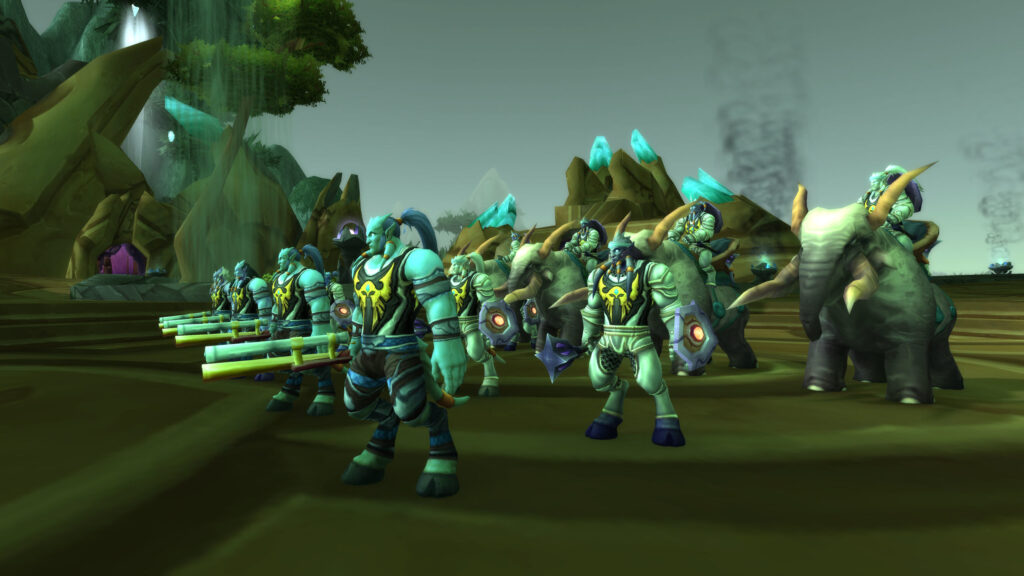
Faction identity has evolved from conflict to cultural difference. The red and blue banners no longer divide—they define diversity within unity.
Faction Pride in Modern WoW
Even in the age of Warbands and shared progression, faction pride remains visible everywhere—from transmog themes to forum debates. Events like the Trial of Style or PvP brawls reignite old rivalries in playful ways. Blizzard cleverly preserves that tension, ensuring the emotional DNA of Warcraft endures.
| Faction | Core Values | Modern Representation |
|---|---|---|
| Alliance | Order, unity, justice | Anduin, Turalyon, Jaina |
| Horde | Honor, freedom, resilience | Thrall, Baine, Eitrigg |
Even in peace, these ideals define identity. Players don’t simply fight for their faction—they live by its code.
Conclusion
Cross-faction play may have bridged the gap between Horde and Alliance, but pride runs deeper than game systems. It’s cultural, emotional, and personal. Faction identity represents years of shared struggle, friendship, and triumph.
As long as Azeroth stands, the red and blue banners will continue to fly—not as barriers, but as symbols of history and belonging that keep the spirit of Warcraft alive.